


Automation - Hack & Slash / Unity / 3 Weeks

SYSTEM Design
Mechanica Abyss is a personal project done for my 3rd year of game design studies. I did :
- Design the core concept of the game
- Design in detail the "manage" feature
- A machination of the "research" feature
- A unity's prototype to show the unit movement
Check the doc here !


MECHANICA ABYSS is about automating the demon's looting and the crafting to create the perfect items!


Greetings everyone, I am the solo designer of this concept: Mechica Abyss. I wanted to mix two genre that doesn’t seem to hold much in common at first sight: the Automation genre and Hack & slash.
But listen, As a hack & slash player, I always strive for the perfect item with the almost perfect roll. After hundred of hours grinding rifts, you see the glowing item fall on the floor and finally, this is it. You feel like the mightiest (and luckiest) person in the world. That is the classic hack & slash experience, But with Mechanica Abyss, I want to propose a different experience. Killing and looting demons alone is thrilling but it’s not optimal, manage an army of heroes that do it for you automatically instead. Recycling items is annoying so automate it. Crafting a hundred weapons by hand to get the good affixes is slow, so let your forge do it automatically.
With Mechanica Abyss, I don’t want the player to strive for the almost perfect item, but for the PERFECT item. And I offer him the power of industrialisation to do so.


I wanted a stylised dark comic book style, greatly inspired by Darkest Dungeon (1 & 2) and Hellboy
AUTOMATION MEETS HACK & SLASH

To create the experience described above, I put the light on two features : « Command » & « Produce ». I did a feature design document on the « Command » so i’m not going to focus on it for this part.
To blend the two genre, I took a simple approach : Any classic activity that you can do in a Hack & Slash must be automatable. Killing demons ? Command multiple heroes to do so. Crafting items looking for the perfect roll ? Build infrastructure like a forge, an alchemy table linked by conveyor belts to automate the process. The progression in the game is done via the Customize & Research feature. Research and the obtention of new technologies is a feature proper to the automation genre. The customization of your heroes is a feature proper to the Hack & Slash, making the character’s build and refining it. I want the player to feel the visceral urge to tirelessly grow its factory along the desire for the obtention of legendary loot.
Visually, I wanted the project in a dark fantasy settings similar to my main reference (Diablo, Grim Dawn) with a stylised style similar to darkest dungeon 2.
Since an editor presentation is quite short, I did not set up a slide template but instead make each slide visually unique to reinforce their message. I took a similar approach for specific slides of the persona.
COMMAND ANCIENT HEROES
For a factory to be running, a ressource input is necessary. And this ressource input is the loot taken from the enemy’s corpse. The player’s character could do it himself but isn’t the point of the game to automate everything ?
Off course it is, so I want the player to automate this process. The first step I took to design this feature is to cut this it into smaller objectives : this are the main game mechanics. I cut the feature as follows :
•Find enemies
•Kill enemies
•Loot enemies
•Bring back the loot to a factory
To stay close to my hack & slash inspiration, I don’t want a machine doing those activities but heroes similar to the one we can play in the genre. That is why the player’s units are heroes with unique classes. Finding the enemies is a logistic challenge for the player since i want him to manage the path his heroes must take to kill the most enemies in the shortest time.
To help the player in this task, I once again introduce an iconic mechanic of the Hack & Slash: portals and portal scrolls. I want portals to be an important tools for the player to manage its heroes pathing. Lastly, I want the player to have a full control over its factory’s input by controlling exactly how the loot is received using chests and loot filters.


Details about the heroes economy

Formulas about the effigy's drop tendancy
RESEARCH & ECONOMY
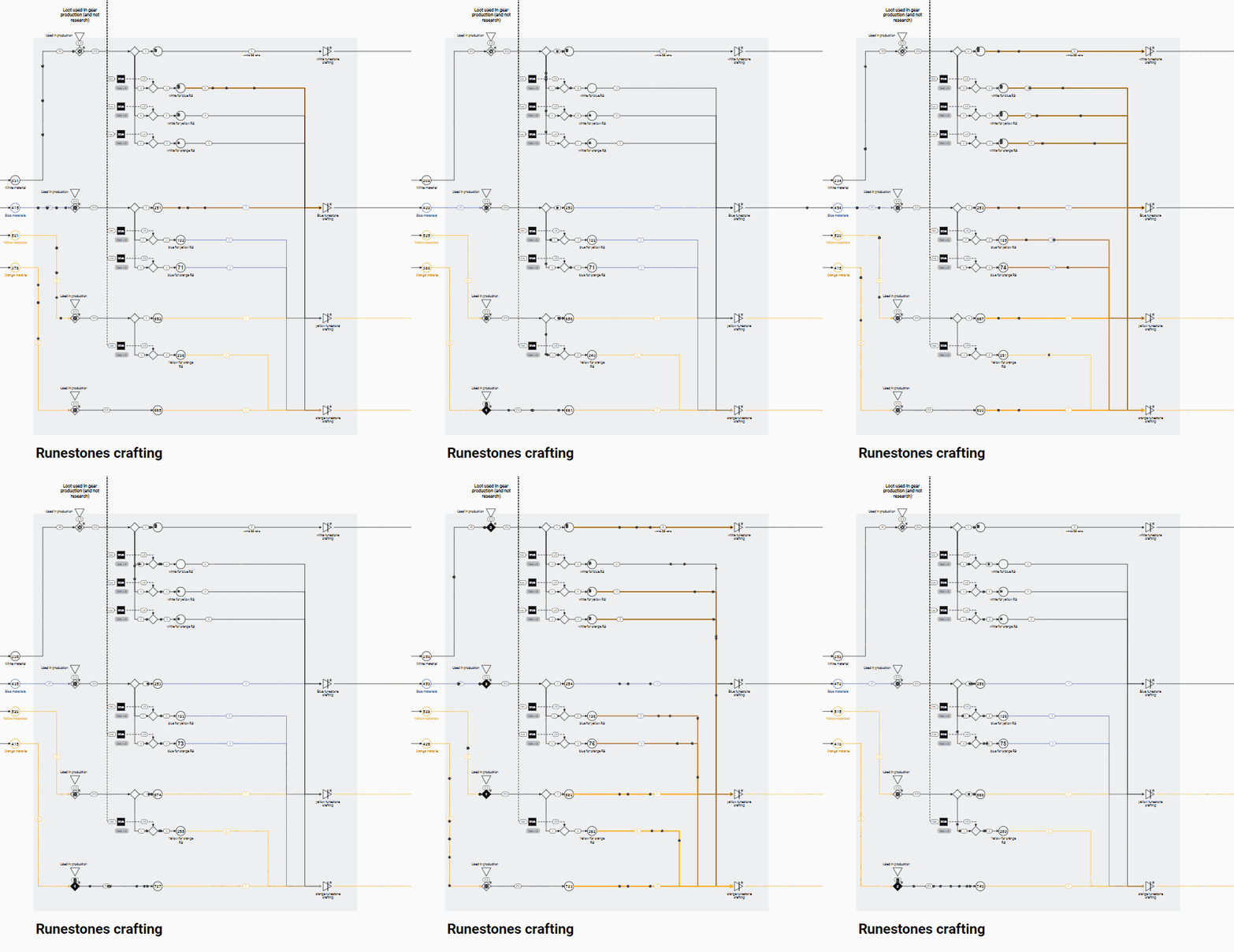
The crafting of each runestone, using material from its tier and all the tier below
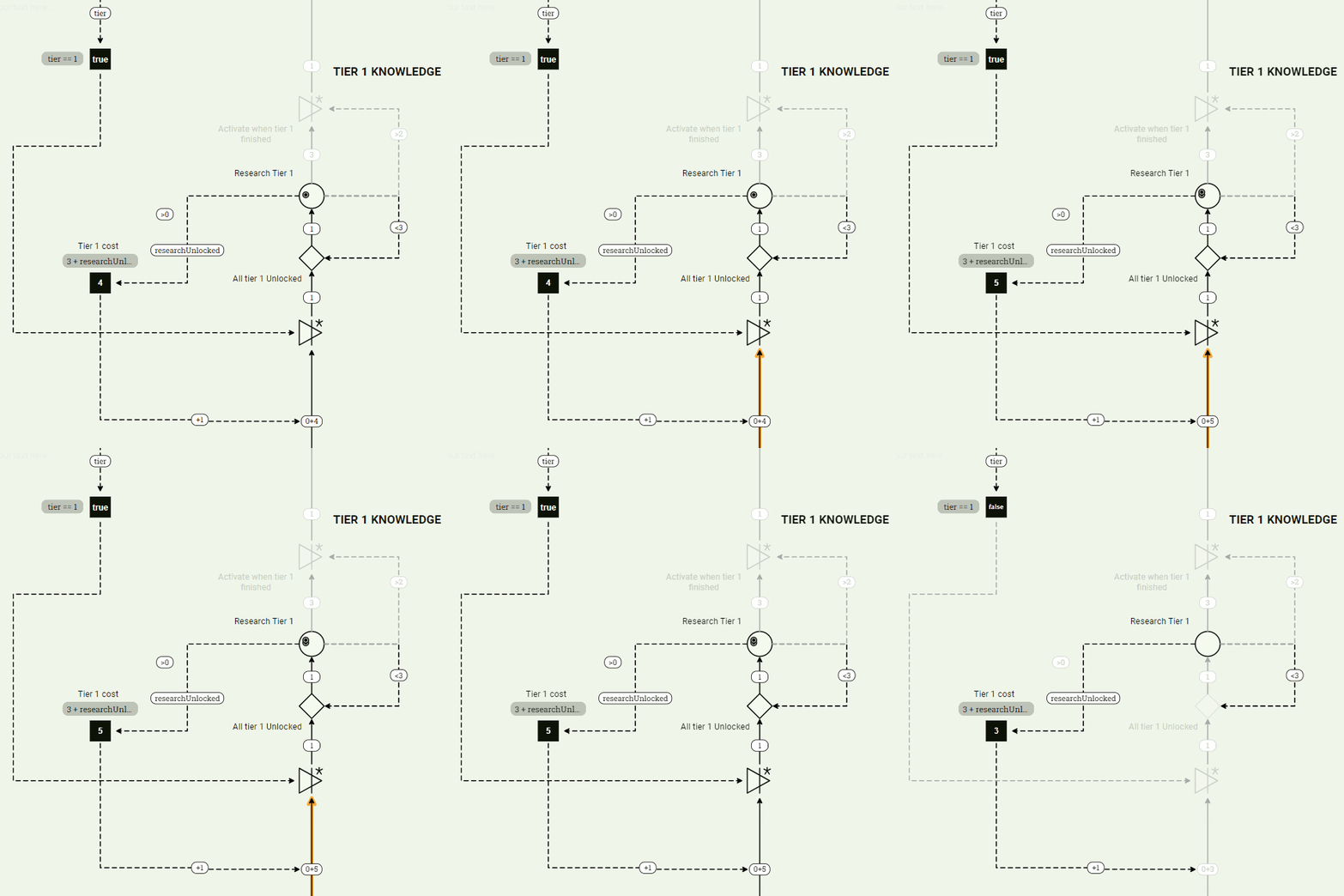
Unlocking tier 1 technologies. The tier 1 is finished at 3 tech, and the tier 2 research starts.
To simulate the economy of the research feature, I realized a machination. I organized it into three parts : The looting, the crafting of runestones and the research of new technologies.
I wanted to have a similar system of research to factorio or dyson sphere program. Research are organized in tier and each technologies is unlocked by spending a ressource : the runestone in this case which came in different rarity (white, blue, yellow & orange).
Runestones are the ressource that you must spend to unlock new technologies. Each tier of research demands runestone from its actual tier and all lower tier. (one yellow technology demands white, blue and yellow runestones).
UNIT MOVEMENT
To follow up on my Feature design document about the command feature, I wanted to prototype the unit movement.
To do so , I implemented the A* algorithm on Unity. It is grid-based since my main inspiration is Factorio. The user can set up path point for the unit to move to. The path point are highlighted in green while the path is in blue. I simplify the combat and loot to its bare minimum. The red box around the unit represent its kill zone. It destroys enemies and the loot obtained is displayed in the UI.
I already worked with a grid system in the case of a city-builder and a tactical, so i could reuse the code to prototype faster.
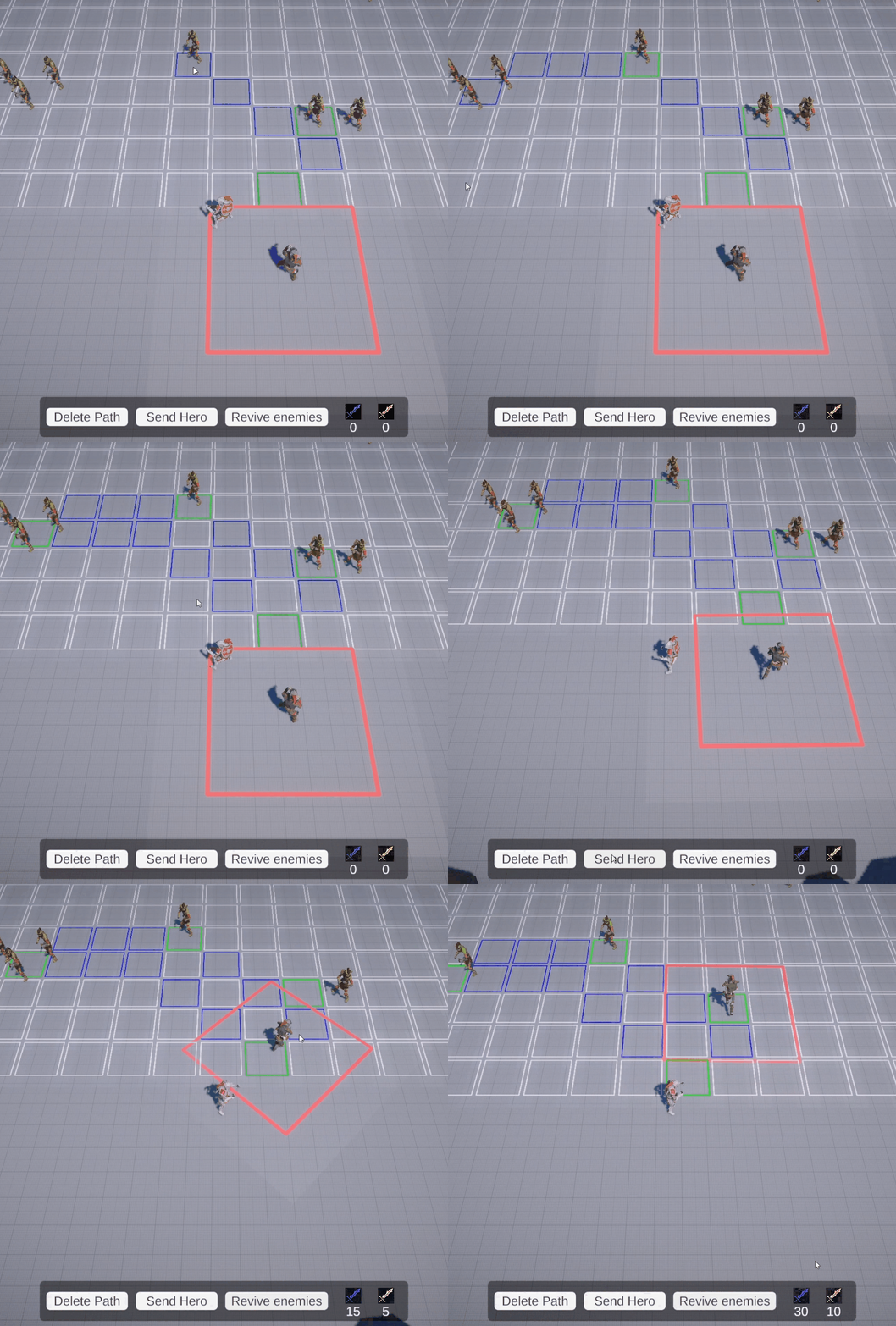
Unit is moving through the path and killing enemies

Script to manage the unit movement


